
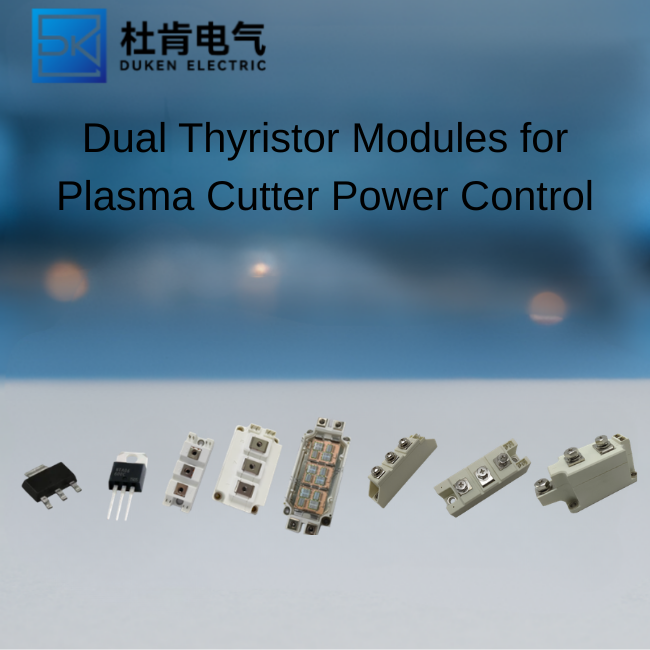
Dual Thyristor Modules for Plasma Cutter Power Control
Author: Selina
For OEMs and distributors, sourcing a 200A 400V fast recovery diode is not simply a matter of finding the lowest quotation. The device may become a long-life component in motor drives, automotive electronics, battery test systems, welding equipment, and industrial inverters. A weak sourcing decision can create redesign work, field failures, counterfeit risk, and production delays. A strong decision combines technical validation, supplier capability, documentation, lifecycle planning, and total cost analysis.
Define the Application Before Requesting Quotes
A useful request for quotation should include more than current, voltage, and package. Suppliers need the switching frequency, current waveform, duty cycle, maximum case temperature, expected surge events, cooling method, mounting arrangement, and annual volume.
For a motor drive, clarify whether the diode will operate as a free-wheeling device, snubber diode, clamp diode, or rectifier. Each function creates different stress. An IGBT free-wheeling diode faces repetitive reverse recovery, while a line-frequency rectifier may prioritize forward voltage and surge current.
Voltage Margin
A 400V rating should not be accepted without measuring the real reverse-voltage waveform. Cable inductance, busbar layout, switching speed, and motor conditions may produce overshoot. Engineers should include normal variation, abnormal operation, and safety margin in the selection.
Current and Thermal Margin
The 200A rating usually depends on a defined case temperature and waveform. Review average, RMS, repetitive peak, and surge current. Calculate total loss using forward voltage and reverse recovery behavior at the intended junction temperature. The heatsink must maintain a safe thermal margin during full load and reduced-cooling conditions.
Build a Technical Comparison Matrix
Procurement teams should compare candidate devices using the same criteria. Important fields include VRRM, IFAV, IFRMS, IFSM, VF, IR, trr, Qrr, RθJC, TJ maximum, package type, thread, polarity, isolation voltage, mounting torque, weight, and compliance documentation.
A ceramic insulated package for frequency inverter drives low reverse leakage current 200A 400V fast recovery diode may rank highly when the design needs a shared heatsink and simplified isolation. A stud package may rank higher when field replacement, flexible busbar placement, and direct thermal attachment are priorities.
Compare Data at Equivalent Conditions
Datasheet numbers can be misleading when test conditions differ. One supplier may specify trr at low current and 25°C, while another reports a higher value at realistic current and elevated temperature. Ask for curves or test reports that allow an equivalent comparison.
Reverse leakage should also be compared at the same voltage and temperature. High-temperature leakage is particularly relevant in compact inverters and automotive-related equipment with extended duty cycles.
Assess the Supplier Beyond the Datasheet
A technically attractive diode can still create risk if the supplier lacks process control or long-term support. Buyers should evaluate manufacturing history, quality systems, lot traceability, test coverage, capacity, lead-time stability, engineering response, and change-notification procedures.
For strategic programs, request information about wafer sourcing, assembly location, final test location, subcontractor controls, and business continuity. Confirm whether the manufacturer can provide failure analysis and corrective-action reports when a field issue occurs.
Counterfeit and Traceability Controls
High-current semiconductors are vulnerable to re-marking, unauthorized substitution, and mixed lots. Incoming material should be checked for consistent markings, dimensions, packaging, date codes, and electrical characteristics. Purchase through traceable channels and retain certificates and lot records.
Distributors should be able to explain storage conditions and the chain of custody. A low price does not compensate for uncertain origin when the device is used in safety-critical or high-value equipment.
Validate Samples in the Real Circuit
Bench testing should reproduce the intended IGBT, gate resistance, bus voltage, current, cooling system, and physical layout. A double-pulse test can reveal reverse recovery current, voltage overshoot, and interaction with the IGBT.
For a 3/4″-16UNF stud type IGBT free-wheeling diode low thermal resistance 200A 400V fast recovery diode, validation should also cover mounting torque, heatsink flatness, thermal compound thickness, thread quality, and polarity. Mechanical installation is part of electrical reliability.
Recommended testing includes full-load temperature measurement, surge-current testing, power cycling, thermal cycling, vibration, humidity exposure, insulation testing, and extended operation. Sample approval should use production-intent devices, not specially selected engineering samples.
Compare Silicon, Standard Rectifier, and SiC Options
A silicon fast recovery diode offers a proven balance of switching speed, surge capability, availability, and cost. It is often the most practical choice for mature IGBT motor drive platforms.
A standard rectifier diode is less expensive but may create excessive reverse recovery loss in a high-frequency circuit. A bridge rectifier is appropriate for AC input conversion, not as a direct substitute for a dedicated free-wheeling diode.
A SiC diode can reduce reverse recovery loss and support higher switching frequency. However, it may increase component cost and require changes to EMI control, surge design, and qualification. The decision should be based on total system efficiency and lifecycle cost.
In many established industrial designs, the 200A 400V fast recovery diode remains the lowest-risk solution because it provides predictable behavior and broad replacement compatibility.
Plan for Lifecycle and Supply Continuity
Industrial equipment may remain in production for many years and require replacement parts for even longer. Ask suppliers about product lifecycle status, minimum order quantities, forecast requirements, last-time-buy procedures, and compatible alternatives.
Maintain an approved vendor list with at least one technically validated backup where possible. However, a second source should not be treated as equivalent without circuit testing. Differences in Qrr, forward voltage, leakage, and package construction can affect inverter behavior.
Total Cost of Ownership
Evaluate unit price together with qualification cost, assembly labor, heatsink requirements, expected failure rate, warranty exposure, inventory, and serviceability. A stud device may lower field repair cost. An insulated package may reduce assembly steps and isolation hardware.
The most economical device is the one that meets performance requirements with stable quality and manageable supply risk—not necessarily the one with the lowest purchase price.
Conclusion
Successful sourcing of a 200A 400V fast recovery diode requires coordinated work between procurement, engineering, quality, and the supplier. Define real operating conditions, compare data at equivalent test points, validate production samples, control traceability, and plan for lifecycle support. This process reduces technical risk, prevents costly substitutions, and supports consistent motor drive and automotive electronics production.
FAQ
What should be included in an RFQ for a fast recovery diode?
Include electrical stress, switching frequency, package, cooling, environmental requirements, annual volume, compliance needs, and validation expectations.
Can two suppliers’ 200A 400V diodes be treated as direct equivalents?
No. Recovery charge, forward voltage, leakage, surge capability, thermal resistance, and package details must be compared and tested.
How can buyers reduce counterfeit risk?
Use traceable channels, inspect markings and packaging, verify lots, and perform electrical sampling.
Why test at high temperature?
Leakage, forward voltage, recovery behavior, and thermal margin change with junction temperature.
Is the lowest-Qrr diode always the best choice?
No. Forward loss, recovery softness, surge capability, cost, and the IGBT switching profile must also be considered.
SEO Keywords
200A 400V fast recovery diode, fast recovery diode sourcing, motor drive diode supplier, automotive electronics diode, IGBT free-wheeling diode, stud mount diode, ceramic insulated diode, low reverse leakage diode, low thermal resistance diode, high current rectifier, power semiconductor procurement, OEM diode sourcing, industrial diode distributor, DO-9 fast recovery diode, 3/4-16UNF diode, frequency inverter component, motor controller semiconductor, reverse recovery charge, low Qrr diode, high surge current diode, diode supplier qualification, semiconductor traceability, counterfeit diode prevention, diode incoming inspection, power electronics supply chain, inverter component sourcing, long-term semiconductor supply, silicon fast recovery diode, SiC diode comparison, bridge rectifier comparison, rectifier diode selection, diode lifecycle management, approved vendor list, industrial inverter reliability, high frequency switch diode, power cycling qualification, thermal cycling test, automotive test equipment diode, power diode manufacturer, B2B semiconductor sourcing.
READ MORE:
300A Phase Control Thyristor vs IGBT, SiC, and Rectifier Solutions
Using 6500 V 300A Phase Control Thyristors in Large-Scale Heating Systems
Selecting a KP300A-6500V Thyristor for High-Voltage AC Power Regulators
Forced-Cooling Heat Sink Design for 300A Thyristors in Mining Equipment
DCB Thyristor Modules for Temperature-Controlled Energy Storage Systems
Harmonics and Power Factor in Phase-Controlled Thyristor Systems
How to Read a 300A Phase Control Thyristor Datasheet for Industrial Power Systems